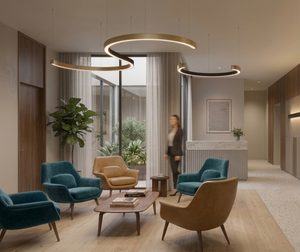
Architectural Lighting: The Key to Successful Lighting Projects
Gone are the days when lighting was simply seen as a means to illuminate a space.
Today, architects, interior designers, and engineers are focused on integrating new lighting techniques into their projects to create a captivating atmosphere that goes beyond the practical aspect of visibility.
This new approach to lighting is known as architectural lighting.
By combining design techniques and lighting science, architectural lighting allows for the creation of an integrated project that takes into account both the visual and emotional needs of users, as well as the aesthetic and functional requirements of the space.
Continue reading to learn more about architectural lighting design.
What is architectural lighting?
Architectural lighting is a strategic approach that combines design and lighting to achieve a visual, functional, and emotional balance in a space.
More than just illuminating the area, this approach enhances the architectural character of the space, highlighting textures, colors, and volumes.
This ensures that lighting complements the design and functionality of each area, creating a visual experience that adapts to the style and specific needs of the space.
Main Goals of Architectural Lighting:
Since lighting should be viewed as a holistic element, it must meet the different requirements of the project, whether in terms of design, functionality, or efficiency.
More specifically, the goals of architectural lighting are:
- Enhancing the Project’s Design:
With various formats and applications, choosing architectural lighting allows the design of a project to be highlighted. How?
By emphasizing the space’s textures, colors, and architecture.
To achieve this, lighting will be used strategically, with appropriate techniques and specifications that make the space visually more engaging and interesting.
Maximizing Lighting Effects:
Well-planned architectural lighting creates visual effects that serve both ergonomic and functional purposes. When discussing lighting effects, three key aspects can be highlighted:
- Functionality: The lighting should provide enough light to make the environment safe and comfortable, without compromising aesthetics.
- Atmosphere: In addition to being functional, lighting defines the space’s atmosphere, directly influencing how it is perceived. As such, professionals should aim to create an environment that aligns with the space’s intended purpose.
- Orientation: Lighting can also guide users, directing their gaze and the flow of movement through the space. The choice of lighting fixtures can play a role in this— for example, linear lights and spotlights can create a sense of continuity throughout the space.
- Optimizing Energy Efficiency in the Space:
One of the key benefits of architectural lighting design is its ability to maximize energy efficiency in a project.
How are design and energy efficiency related?
The key lies in the initial study of the space: understanding the available natural light sources and identifying the best placement for light fixtures allows for a more accurate analysis of the actual lighting needs, providing clarity on how to apply it efficiently.
Often, smart lighting systems, such as DALI systems, are used to optimize projects. This technology enables the regulation of light temperature and intensity according to the moment’s needs, making interior lighting more adaptable and energy-efficient.
Architectural lighting design plays a crucial role in the perception of a space.
Choosing the right light fixtures and consulting with lighting professionals are essential steps to ensure the success of any interior design project.
These professionals provide insights on positioning, color temperature, and the most suitable types of lighting to achieve the desired effect, whether in commercial, residential, or corporate spaces.
Begolux offers a lighting project planning service, available to professionals seeking support for their projects.
Contact us to ensure the best lighting solutions for your designs.

Infinity Curve Suspended: You shape it. We light it
The Infinity Curve Suspended is a modular suspended LED light fitting. Unlike a conventional light fitting, it does not have a fixed shape. Instead, it combines 180° and 90° curves with one another and with the Infinity Profile. It is therefore the architect, the designer or the client who determines the final shape, depending on the space. Begolux then produces the piece based on that design. How the system works The system comprises three elements. Firstly, the 180° curve forms a semicircle and is used for arches

Begolux at Architect@Work Lisbon 2026
Begolux will be taking part in the 2026 edition of Architect@Work Lisbon, which takes place on 3 and 4 December at FIL. The brand will be at stand 78, where it will be showcasing the WORK & LIVE collection. Space for Business In offices and commercial spaces, lighting and acoustic comfort are increasingly being considered together. This is the idea behind the ‘Space for Business’ concept, which combines both requirements in a single unit, with fewer ceiling-mounted components and fewer suppliers involved in the project. Lighting and
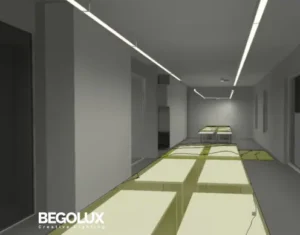
Lighting Design Studies: It’s Role in a Successful Project
Incorrect lighting in a space has a negative impact on its well-being and functionality. Choosing the wrong lighting can cause discomfort and fatigue, and alter one’s perception of a particular space. Lighting design studies help to create a well-lit environment, ensuring it is comfortable, efficient and suitable for the activities carried out there. The aim of the study is to ensure, through a detailed analysis, that the lighting is integrated not only functionally but also architecturally, in accordance with standard EN 12464-1. The project goes far beyond